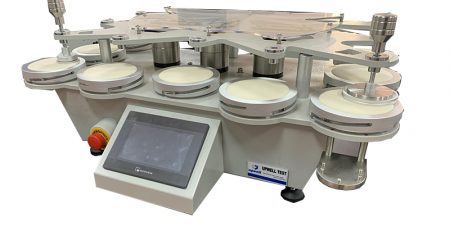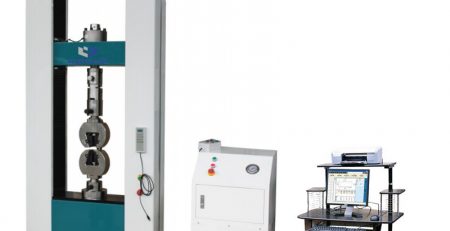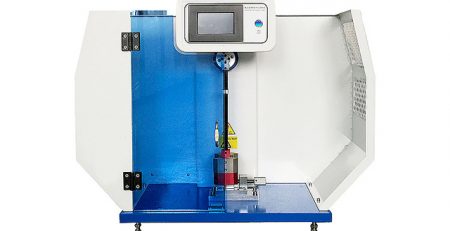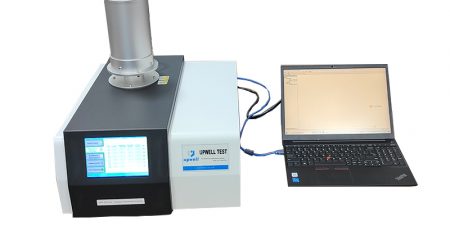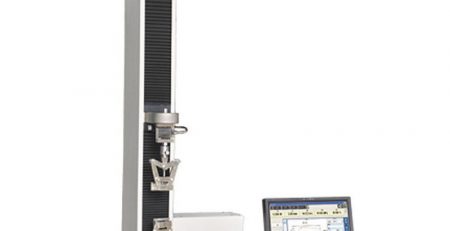
The tensile testing machine is a high-precision, high-tech material testing equipment, which can be used to perform tensile, compression, bending, shearing, peeling and other mechanical performance tests on metallic and non-metallic materials. The reason why it has become the main equipment for material testing is that it has the advantages of easy operation and high precision.
However, if we buy a tensile testing machine of poor quality because of the price, then the test data may be inaccurate. If the test fails due to unskilled human operation, its use value will be greatly reduced. Next, UPWELL TEST will share five important factors that affect the performance, accuracy and life of the tensile testing machine.
Factor 1: Tensile testing machine value sensor, because the quality of the sensor determines the accuracy and measurement stability of the testing machine. At present, some electronic tensile machines on the market use sensors for small force values and generally use S-type sensors, and large force values generally use spokes. Type sensors, the inside of the sensor is generally a resistance strain gauge type. If the accuracy of the strain gauge is not high or the anti-aging ability of the glue used to fix the strain gauge is not good, or the sensor material is not good, the accuracy and service life of the sensor will be affected.
Factor 2: The ball screw that drives the sensor movement, because if the screw has a gap, the future test data will directly respond to the maximum deformation and elongation after the test. At present, some tensile testing machine screws on the market use T-shaped ordinary screws. In this case, the gap is relatively large, and the friction force is relatively large and the service life is short.
Factor 3: The transmission system of the tensile testing machine. At present, some electronic tensile machines on the market use reducers, and some use ordinary leather belt transmission. The main drawbacks of these two transmission methods: the former requires regular lubrication, and the latter guarantees The synchronicity of the transmission cannot affect the test results.
Factor 4: The power source (motor) of the tensile testing machine is also called a motor. At present, some electronic tensile machines on the market use ordinary three-phase motors or variable frequency motors. This kind of motor uses analog signal control, which has slow control response and inaccurate positioning. When the speed range is narrow, there is a high speed and then there is no low speed or when there is a low speed there is no high speed, and the speed control is not accurate.
Factor 5: the measurement and control system of the electronic tensile machine (that is, software and hardware). At present, the measurement and control system of some electronic tensile machines on the market adopts 8-bit microcontroller control, which has a low sampling rate and poor anti-interference ability. The other is AD conversion If the number of bits of the AD converter is low, the measurement will not be accurate.
Any futher question please freely to contact us .www.upwelltest.com info@upwelltest.com