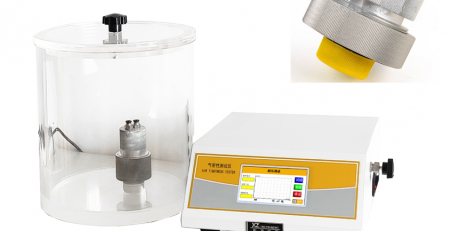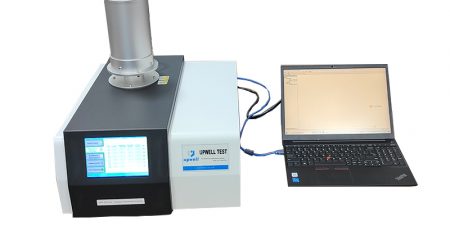
Tearing refers to the phenomenon where a fabric tears due to concentrated load on a localized area of yarn. Examples include: the fabric getting caught on an object, causing localized stress on the yarns and creating a tear; or a section of the fabric being gripped and torn in two.
The main factors affecting fabric tear strength are:
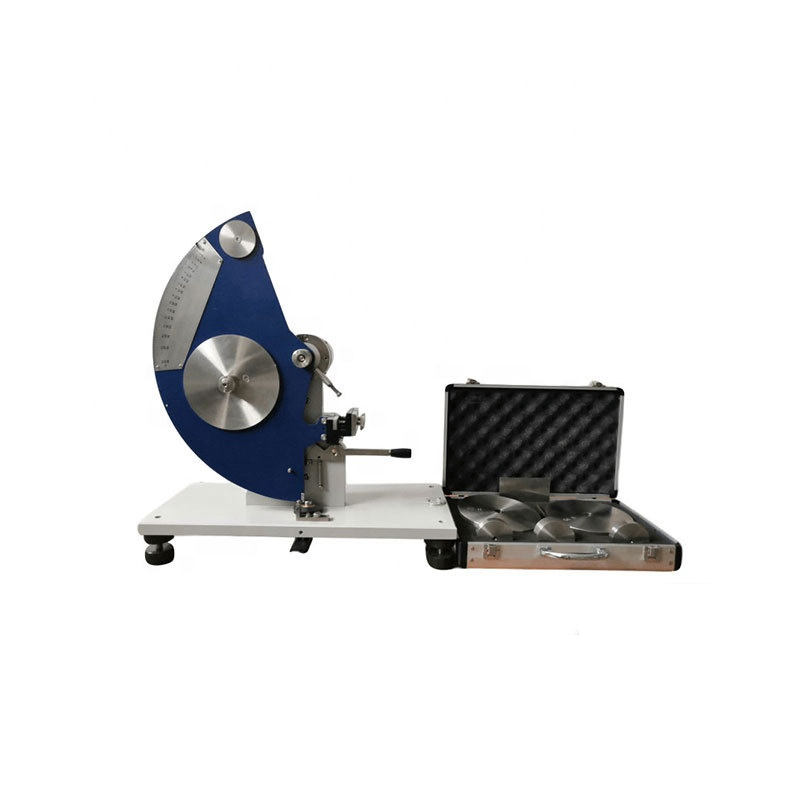
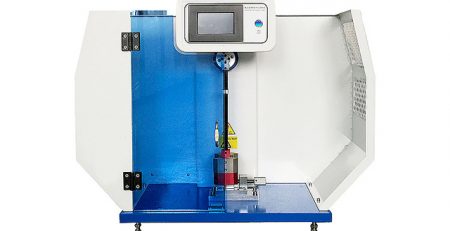
ASTM D 1424 ISO 13937 Fabric Textile Elmendorf Tearing Strength Tester
1) Yarn properties:
① Yarn linear density: This is easy to understand; coarser yarns naturally have better tear and tensile strength.
② Whether the yarn is filament or staple fiber: Staple fibers like cotton and filaments like polyester filament require twisting to bind them together into yarn. Filaments can be directly yarned for textile use. Clearly, the strength of staple fibers is lower than that of filaments.
③ Yarn twist: Twist allows staple fiber yarns or filaments to better bind together, creating cohesion, increasing strength and elasticity, thus improving the fabric’s tear strength. However, twist has its limits. Excessive twist not only fails to improve strength and elasticity but also makes the yarn brittle, reducing strength and elasticity.
④ Yarn breaking elongation, or elasticity, is also important. Higher breaking elongation indicates greater elasticity at break, which significantly affects the size of the tear triangle and thus the fabric’s tear strength.
2) Raw Materials:
As everyone knows, different raw materials exhibit significantly different resistance to external tearing and tensile forces.
3) Fabric Structure
① Plain Weave: This weave has only one yarn float, resulting in the smallest tear triangle and the lowest tear strength.
② Twill Weave: The minimum design length for this weave is two yarn floats (half twill). Therefore, for fabrics with this weave, longer floats result in a larger tear triangle and better tear strength! ③ Satin Weave: The yarn float length of this weave is better than that of twill weave, resulting in a larger tear triangle area and better tear strength. Please refer to the satin weave diagram above for comparison.
④ Modified Weave: This type of weave is derived from arbitrary combinations of the three basic weaves (plain weave, twill weave, and satin weave). Therefore, the tear strength of this type of weave is difficult to compare directly, but it is definitely greater than that of plain weave.
Summary: Plain weave < Twill weave < Satin weave
4) Finishing Processes of Fabrics
① Brushing: Brushing involves polishing the fabric surface to create short, neat nap. This disrupts the structure of the yarns on the fabric surface, significantly reducing yarn strength. Therefore, for brushed fabrics, tear strength and tensile strength must be assessed.
② Raising: Similar to brushing, a certain amount of nap is raised on the fabric surface using a napping knife, but the nap is slightly longer than that of brushed fabric. The impact is the same as brushing.
5) Fabric Density and Shrinkage
The density of the fabric determines the crimp height of the yarn, which in turn determines the fabric shrinkage rate. A higher crimp height results in greater elongation under stress, thus affecting the size of the tear triangle and consequently the tearing force.